
AI ChatbotsInformational•Published October 16, 2026 – Updated October 19, 2026•6 min read

Chatbot vs AI Agent: Which One Does Your Business Actually Need?

Why confusing conversational chatbots with autonomous multi-agent workflows costs enterprises millions, and an actionable decision matrix for software leaders.

Marcus Thorne
Marcus Thorne
Lead Agentic Systems Engineer
Published
October 16, 2026
Chatbot vs AI Agent: Which One Does Your Business Actually Need?
Key Architectural Takeaways
  • Chatbots specialize in retrieving and synthesizing information; AI agents specialize in reasoning, planning, and executing state-changing actions.
  • Deploying an autonomous agent where a deterministic RAG chatbot is sufficient introduces unforced latency, spend, and risk of hallucinated mutations.
  • The highest-ROI pattern pairs a fast conversational frontend with an event-driven agent backend governed by human-in-the-loop approvals.
TL;DR: If your goal is answering employee or customer questions from unstructured documents, build a RAG chatbot. If your goal is executing multi-step business transactions across disparate software systems (e.g., invoice reconciliation, inventory restocking, CRM enrichment), you need an autonomous agent with durable state management.
Editorial Outline & Technical Scope
  1. 01.1. Fundamental Architecture Differences: Conversational vs Action-Oriented
  2. 02.2. State Management: Stateless Context Windows vs Durable State Machines
  3. 03.3. When a Chatbot is the Superior Choice (Search, FAQs, Knowledge Base)
  4. 04.4. When an AI Agent is Mandatory (Multi-Step Execution, Tool Use, Reconciliation)
  5. 05.5. The Hybrid Pattern: Conversational Interface with Agentic Backend
  6. 06.6. Architectural Decision Matrix & Risk Assessment
Related Enterprise Capability
Autonomous Multi-Agent Systems
View architecture blueprint, technology stack, and turnkey delivery timeline.
Explore Architecture

Defining the Architectural Difference

The tech sector frequently conflates chatbots and AI agents, leading enterprises to over-engineer simple search tools or under-engineer complex transactional workflows.

AI Chatbot: The Knowledge Synthesizer

An AI chatbot acts as a natural language interface over information. It takes user intent, retrieves relevant semantic context, and generates a conversational answer. It is fundamentally read-heavy.

AI Agent: The Autonomous Operator

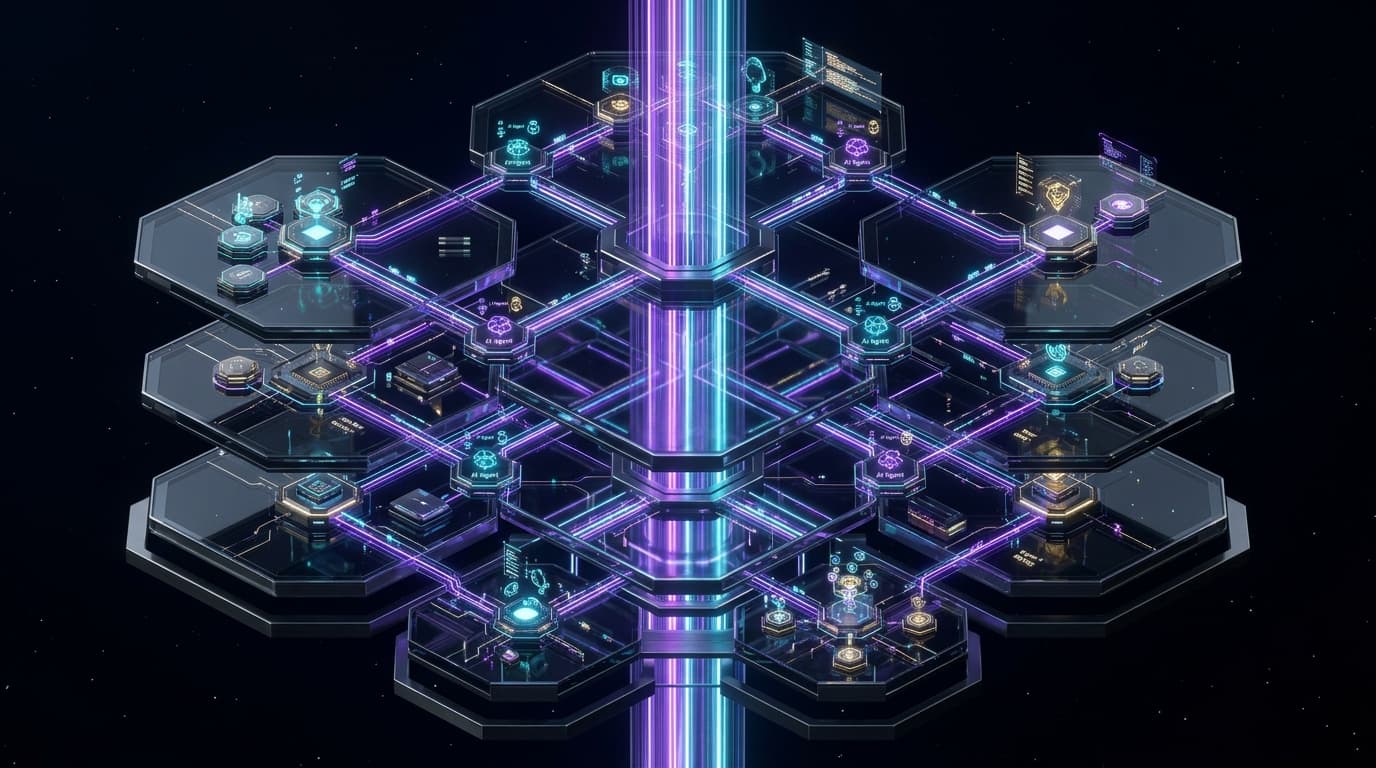
An AI agent possesses agency: the ability to break down goals into sub-tasks, select external tools (APIs, databases, web scrapers), evaluate its own intermediate outputs, and mutate system state. It is fundamentally action-heavy.


Engineering Advisory & Scoping

Building something similar in your infrastructure?

Our principal systems architects provide vendor-neutral code reviews, zero-egress RAG audits, and PoC scoping sessions.

Explore Autonomous Multi-Agent Systems

Feature-by-Feature Technical Comparison

DimensionEnterprise AI ChatbotAutonomous AI Agent
Primary GoalInformation retrieval & Q&AMulti-step task execution & orchestration
State LifespanEphemeral chat sessionDurable, checkpointed state (Temporal.io)
Tool CallingLimited (search query expansion)Extensive (REST APIs, SQL write-backs, email)
Failure ModeHallucinated answerHallucinated system action (e.g. incorrect wire transfer)
Governance NeedContext relevance & PII filteringDual-key human approval & rate-limit throttling
Direct Technical Answers

Frequently Asked Questions

What is the key technical difference between a chatbot and an AI agent?

A chatbot retrieves and synthesizes information to converse with users, whereas an AI agent uses reasoning loops and tool integrations to execute multi-step actions across external software APIs.

Can an AI agent run without human supervision?

While agents can operate autonomously for low-stakes tasks, enterprise-grade systems enforce human-in-the-loop approvals for financial mutations, destructive database writes, and external communications.

Marcus Thorne
Verified Author • Systems Engineering Lead

Marcus Thorne

Lead Agentic Systems Engineer

Distributed systems engineer specializing in deterministic state machines, asynchronous event coordination, and autonomous multi-agent networks.

Related Enterprise Service

Explore our Autonomous Multi-Agent Systems engineering practice

Our systems engineers deploy zero-egress, in-VPC software with 100% IP transfer and guaranteed US/EU synchronous working overlap.

Architectural Dispatch

Engineering Notes Direct to Your Inbox

Practical breakdowns of zero-egress RAG architectures, deterministic multi-agent swarms, and enterprise Go microservices.

One practical email per month. No marketing fluff. Unsubscribe at any time.